Showing posts with label LocalHistory. Show all posts

Tuesday, April 2, 2013

Florida 500

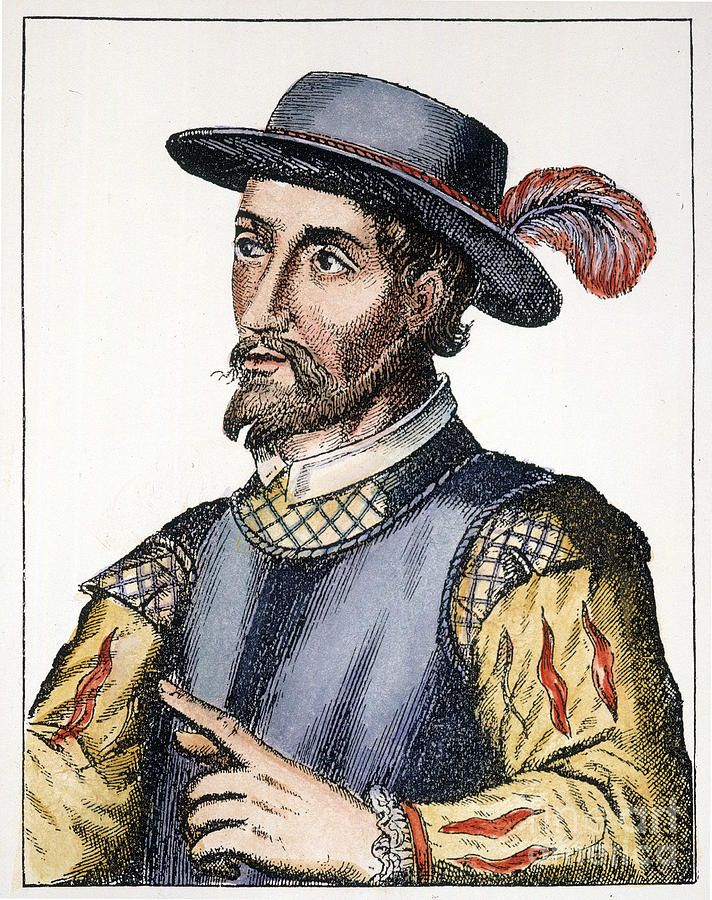
Juan Ponce de Leon
Image Credit: fineartamerica.com
Today is the 500th anniversary of Juan Ponce de Leon's discovery of Florida. In search of a "fountain of youth" and the obligatory Spanish goals of God, Glory and Gold (and not always in that order), Ponce de Leon landed on the east coast of Florida on April 2nd, 1513. The discovery was named Pascua de la Florida after the Easter "Feast of Flowers."

The first permanent settlement did not come until 1565 when Pedro Menendez de Aviles landed in today's St. Augustine. There, his chaplain celebrated the first Catholic Mass in today's United States.

This is a replica of the baptismal font used
to baptize Ponce de Leon in Spain in 1474.
This replica arrived at the Cathedral-Basilica of
St. Augustine in time for the Anniversary Mass
to be celebrated on April 3, 2013.
Info
The initial discovery of Florida five hundred years ago set off a very rich history for this peninsula, as well as shaping the colonial and naval development for three imperial powers - Spain, France and Britain. Florida provided a vital role because of its location to the Gulf Stream, an oceanic highway of sorts that connects shipping lanes of the Caribbean and Gulf of Mexico back to Europe via the North Atlantic. Spanish Florida expelled French Huguenots from Ft. Caroline on the St. John's River and the colony became a thorn to its British colonial neighbors to the north. After the Seven Years (a.k.a. French and Indian) War, Florida entered a 20-year period of British rule (1763-1783). Spanish and British architecture is still evident in St. Augustine today. After the U.S. War for Independence, Florida returned to Spanish rule and Loyalist exiles from  the British North American colonies were expelled, causing their second major migration in only a few years. After decades of shaky Spanish rule and an invasion by Andrew Jackson, Spain ceded Florida to the United States in 1819. The territory gained statehood status in 1845. By that time, the capital had moved from St. Augustine to Tallahassee. This was considered an ideal location as it was mid-way between the two most important cities at the time, St. Augustine and Pensacola. In 1861, Florida seceded from the Union, following the lead of six other slave states of the Deep South. Though Florida did not serve a central role in the Civil War due to its sparse population, its geographic location was vital. Florida was a cattle-rich state and its cattle fed the Confederacy. The Battle of Olustee and the occupation of Jacksonville were intended to cut off the cattle supply for the Confederacy, one segment of the Union's "Anaconda Plan." After the Civil War, Florida experienced a tremendous period of growth from the late 1800s well into the twentieth century. Jacksonville flourished as a tourist destination and the trade port of Tampa grew exponentially. Former Rockefeller associate Henry Flagler built railroads in the state. With a railroad to South Florida in the early twentieth century, combined with canal projects that made the land habitable, the development of the Miami region began.  This set off the largest period of growth in the state and a century that would witness an explosion of population due to the country's "sunbelt" migration as well as new job opportunities, including those created by NASA.  Florida's warm climate and sandy beaches already attracted plenty of tourists.  Tourism would explode in the state with the opening of Walt Disney World in 1971. Today, Florida continues to attract both tourists and new residents and remains one of the fastest growing states in the union.

This is simply a short summary of Florida's very rich and dynamic history.  Florida also has a very rich Catholic history which also will be celebrated this week, including a Mass celebrated tomorrow at the Cathedral-Basilica of St. Augustine.  The Bishop of St. Augustine, the Most Reverend Felipe Estevez, is certainly well-versed in Florida's Catholic history as evident by his homily given at his installation in 2011 (linked here).  Check out the resources below for more information on Florida history!

Viva Florida!


Book Recommendations:
I had the opportunity to read several books on Florida history as a student at the University of North Florida.  I had the privilege of learning under Dr. Daniel Schafer, one of the leading historians of state history and author of several books on key people in Florida History.  Here are a few of my favorite books on Florida:

  • The New History of Florida edited by Michael Gannon (1996)
  • The Oldest City: St. Augustine Saga of Survival edited by Jean Parker Waterbury and published by the St. Augustine Historical Society (1983)
  • Patrick D. Smith's A Land Remembered (1984).  This is a historical fiction novel set in Old Florida.  The novel portrays three generations of the MacIvey family who experience the frontier history of Florida from the 1860s through the twentieth century.  This book presented such a gripping story that I easily journeyed through its 400 pages in only a few days.  
  • James B. Crook's Jacksonville: The Consolidation Story, from Civil Rights to the Jaguars (2004).  I am certainly an enthusiast for my hometown and this is a great recent history book on Jacksonville!
  • A good read on the Catholic history of St. Augustine is Charles Gallagher's Cross & Crozier: A History of the Diocese of St. Augustine (1999).
Web Resources:

Twitter:

  • Hashtags: #florida500, #vivaflorida
  • @VivaFlorida - Official Twitter handle for the State's 500th Anniversary
  • @StAugustine450 - 450th Anniversary of St. Augustine
  • @FLMemory
Past Blog Posts:

Wednesday, May 30, 2012

Milestones

Over six months have passed since my last blog post.  Why?  New baby, busy family and a busy work schedule.  These are good reasons, right?  Now that the school year is closing, I finally have a chance to write.

This year marks several significant anniversaries in U.S. and local history - and an exciting time to study history.   Here's a compilation of the milestones of 2012 (in order):

450th Anniversary of the French Arrival on the First Coast
In May of 1562, French explorer Jean Ribault entered what the French called the "River May," today the St. Johns River.  The French later founded Fort Caroline on a high river bluff which became a refuge for Huguenots escaping religious persecution.  The French did not last very long at Ft. Caroline after their slaughter in 1565 by Pedro Menendez of Spain.  Though the French did attempt to re-settle here, they were never successful at regaining a foothold in Florida.  Instead, Florida became a Spanish possession and the river was re-named for Saint John.

I took this picture on the AP U.S. History field trip to Fort Caroline on May 17th.

For further information about this milestone, explore the following:

225th Anniversary of the United States Constitution
In an election year filled with questions of constitutionality and the proper role of the federal government, it is very timely that we mark this important milestone.  The United States Constitution of 1787 is our nation's second constitution, the first being the ineffective Articles of Confederation.

To the right is a picture I took of the actual Constitution at the National Archives in 2005.

As this anniversary approaches, be sure to follow the hashtag #constitution225 on Twitter

200th Anniversary of the War of 1812
The War of 1812 is often considered America's second war for independence.  Though militarily this war was a disaster resulting in the burning of the national capitol and emerging sectionalism, the two and half years of war did result in a surge of nationalism and the drafting of the Star Spangled Banner, later to become the national anthem.  Andrew Jackson's fame was solidified as the victor of New Orleans and Americans began to move west in stronger numbers.  By standing up to the British, the United States legitimized itself as an independent nation.

I have acquired several books on the War of 1812 and I hope to have more posts later this summer.

Some additional resources:


150th Anniversary: Civil War Events of 1862, the Homestead Act and the Pacific Railway Act
I have written several posts regarding the 150th anniversary of the Civil War.  The year 1862 was certainly pivotal as by the close of the year, a long and deadly conflict was now impossible to avoid, a fact now recognized by both sides.  Bloody battles at Shiloh, Antietam and in Virginia foreshadowed the terrible years to come.  By September, Lincoln had issued his Emancipation Proclamation fundamentally changing the war from one of union to one for freedom.

With southern Democrats absent from Congress, Republicans were able to pass two significant laws, the Homestead Act and the Pacific Railway Act.  These acts opened the west to settlement with free land, business opportunities and an emerging transcontinental railroad network.

To the right is a picture of a homestead grant, taken at the National Archives in 2005.

For further interest:

  • Twitter - #CW150 #HomesteadAct150
  • The Homestead National Monument of America in Nebraska - on Twitter @HomesteadNM
  • Union Pacific's 150th Anniversary Website:  http://www.up150.com/
75th Anniversary: The Golden Gate Bridge
Last week, San Francisco celebrated the 75th anniversary of the Golden Gate Bridge.  A technological marvel for its day, the Golden Gate bridge rose above San Francisco Bay at a time when Americans needed a sense of hope, trying desperately to rise above the worst economic depression in history.

Here's a picture I took from the San Francisco side of the bridge in September 2006 while my wife and I were on our honeymoon.


50th Anniversary: The Cuban Missile Crisis
October marks the fiftieth anniversary of the Cuban Missile Crisis, the climax of tensions in the Cold War and the closest the United States and the Soviet Union came to the brink of thermonuclear war.  As I read oral history papers submitted by my students, I continue to learn more about the true fear experienced by Americans during those thirteen troubling days.  One colleague recently shared a story with me about how he, as a second grader here in Jacksonville, wore a dog tag and was issued ration cans in case the civil defense alarms sounded.  I doubt many students in the United States today could share such an experience.

Jacksonville certainly was on heightened alert in those days with three major naval bases all within Duval County.

In regards to the Cold War, since the release of Russian documents after the fall of the Soviet Union in 1991, historians are learning much more about the very real dangers of the era.

Conclusion


Every year brings a series of anniversaries, though this year does include some of the most significant events in U.S. history. Why do these commemorations and celebrations matter?  Will our knowledge of these events change or improve just because this is an anniversary year?  Maybe.

These anniversaries and commemorations matter because they enhance our collective "American memory."  Celebrating or remembering historical events helps us connect to our national story and build a sense of heritage.  Anniversaries also help reinvigorate discussions and debates on key historical issues - as several of this year's commemorations demonstrate.


Saturday, November 19, 2011

Cannons discovered near St. Augustine

This story is a follow-up to my post on American Loyalists (Liberty's Exiles, 6/30/11). 

For years, there have been several shipwreck excavation projects off the coast of St. Augustine.  Two of the cannons recently discovered off the coast of St. Augustine illustrate a link to the Loyalist history of Florida.  See today's article from the Florida Times-Union:
http://jacksonville.com/news/metro/2011-11-19/story/cannons-coast-reveal-clue-about-centuries-old-shipwreck-site-st

For further interest, see the St. Augustine Lighthouse Archaeological Maritime Program (LAMP)
 

Related Posts Plugin for WordPress, Blogger...